

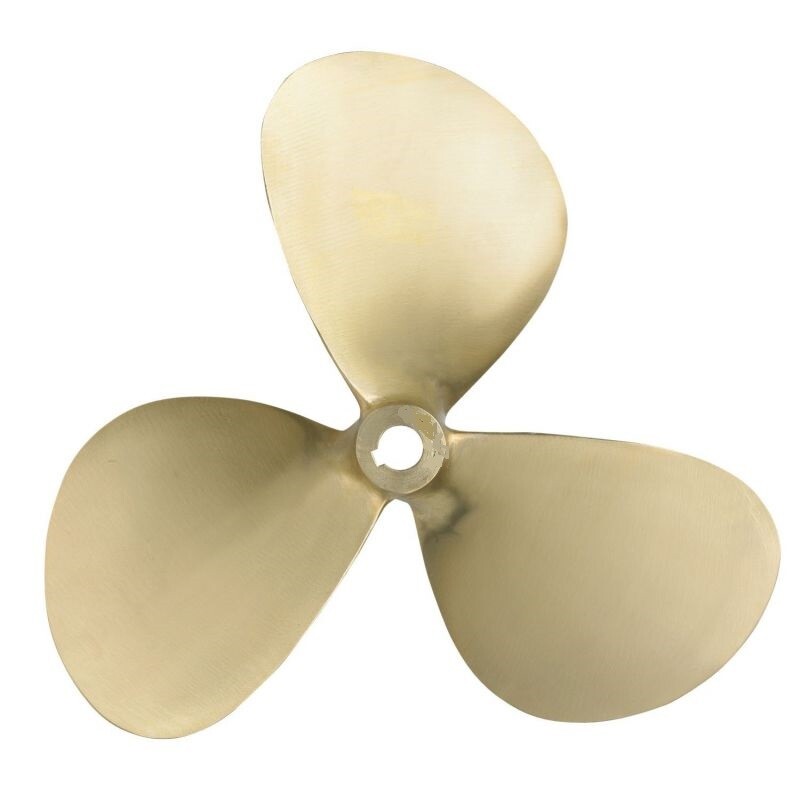
Do you notice your boat accelerating less smoothly, having a lower top speed, or suddenly feeling vibrations? Then it’s logical to look at your propeller. However, not every performance issue immediately means you need a new propeller.
In this blog, I’ll help you quickly decide: (1) if your propeller really needs replacing, (2) which propeller is right for your boat and engine, and (3) how to fit it neatly, including the parts you’ll often want to replace at the same time.
The propeller is the component that converts engine power into thrust.
When to replace a boat propeller (and when not to)
You prevent a bad buy by first seeing the difference between a “propeller problem” and “something else in your drivetrain or setup”.
Signs that often *do* indicate propeller damage
A damaged propeller is usually recognised by a combination of vibrations and poorer performance. Often it’s simple: your propeller has been damaged by a knock, and then you suddenly have a damaged propeller that no longer runs smoothly.
Also, pay attention to your engine revs. If your engine is revving higher without you actually gaining speed, the propeller might be slipping or cavitating. You might notice this particularly when taking a sharp turn. If you see a dent, burr, crack, or a blade that’s slightly out of position? Then replacement is usually the wisest choice.
When the problem is likely elsewhere
Some complaints appear to be propeller damage, but are often caused by:
- Fishing line/debris around the propeller shaft (this costs performance and can damage the shaft seal). Also check directly around the shaft to see if anything is caught. Do you see any line? Carefully remove the line.
- Hub/propeller shaft issues (something is not running straight, or a hub can slip with certain propellers). In the worst-case scenario, you have a twisted propeller hub.
- Setup/loading (trim, engine height or extra weight changes the handling).
If you’re unsure about fishing line, or if you feel distinct play/click, Check that first, otherwise you’ll keep searching with a new propeller.
Repair or replace?
You can sometimes tidy up small burrs. Think of minor damage to the edges, as long as the blade isn’t bent. For tears, significant dents, or bent blades, replacement is usually better.
Quick check before you order
- Watch: are all the blades still neat in shape, without tears or dents?
- Feel: is there no strange play or click when you carefully move the screw?
- Check: do you see (or suspect) fishing line/debris around the shaft?
- Decide: update or replace?
Choosing the right screw: size, pitch and material explained
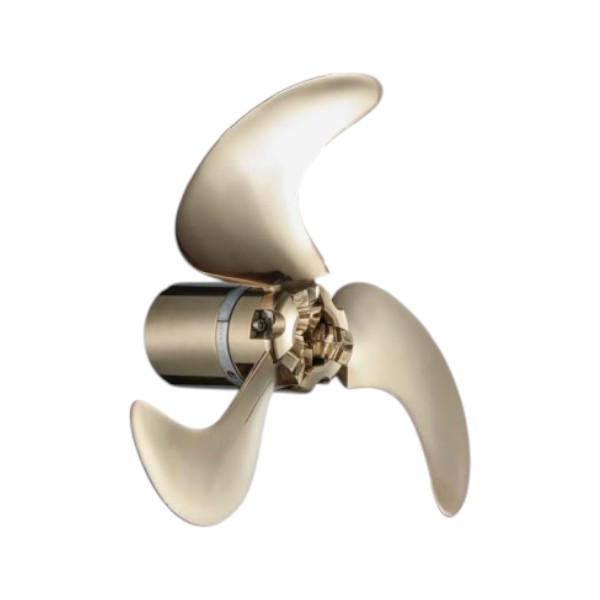
You want your boat to sail “normally” again AND for your engine to stay within its ideal RPM range. Therefore: first data, then size (diameter + pitch), then the choices that really make a difference. You’ll notice a wrong diameter or a poorly fitting propeller immediately in acceleration and RPM.
Start with the information you’re certain of
Get these three things in order:
- Screw size (diameter × pitch, e.g. 13 1/4 × 17).
- Drive type (outboard/ (stern) drive/ inboard).
- Rotation direction (left or right).
Can’t read the measurement anymore? Then filter by drive type and rotation direction, and work from there to a suitable selection.
What “pitch” means: diameter and lead
diameter is mainly about grip. A slightly larger diameter can “grip” more (good for loading), but it can also turn heavier. Therefore, “bigger is better” is not a safe rule.
Pitch feels like acceleration. More pitch can (sometimes) provide more top speed and thus result in a higher speed, but makes pulling away heavier and reduces the engine speed. Less pitch picks up faster and helps with planing, but drives the engine speed up.
Practical guideline: at full throttle, you want to get close to the manufacturer’s recommended RPM range. If you are consistently too high or too low, pitch is often the first place to look. With a well-chosen propeller, you’ll get your boat performing again, meeting your expectations and allowing your engine to perform at its best.
Choices that make the most difference
Material:
- Aluminium propeller: affordable and fine for recreation; a standard aluminium propeller often absorbs impacts sooner. You see this a lot with aluminium propellers.
- Stainless steel (SS): stronger and stiffer; more expensive and with hard impact extra alert to consequential damage.
Do you sail a lot in salt water? Then corrosion will occur faster. Therefore, check your anode and the mounting point around the propeller extra carefully.
Further:
- Number of blades: a 3 blade is often all-round; 4 often provides extra grip and stability (sometimes slightly less top speed).
- Rotation direction: must be correct.
Outboard engine vs (stern) drive
For outboards, the emphasis is on size, rev matching, and rotation direction. For sterndrives, compatibility with your hub/construction often plays a slightly larger role.
If you’re unsure whether to replace like-for-like or choose something new, if your boat has always handled well and you’re mainly repairing damage, a like-for-like replacement makes sense. If you already Had complaints before the damage occurred or your engine speed wasn’t quite right, then choosing/recalculating a new option is a smarter move.
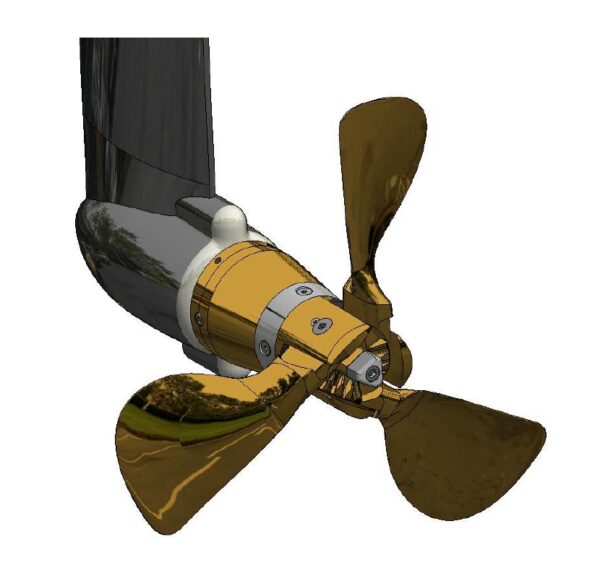
How to replace a propeller (outboard and stern drive) and which parts to replace at the same time.
Work carefully: a forgotten cotter pin or worn woodruff key can ruin your day on the water. Think of it like the moment you replace your old propeller with a new boat propeller: working calmly prevents hassle.
Getting started safely
Engine off, key out (power off where logical). Boat stable. Gloves on. Are you working on an outboard motor? Then pay extra attention to the lower unit and the propeller shaft around the propeller. Also check if there is any damage on or around the shaft.
Mainly replace
Take a photo before you loosen anything, especially around the lower unit. Loosen the retaining nut, undo the nut, and carefully block the propeller (using a wooden block, for example). Use a screwdriver or spanner for the retaining nut with care (don’t force it). A second wooden block can help keep the propeller still. This way, the propeller will come off easily and you’ll have more control over each turn. Remove the propeller and set aside any washers in order. Check the shaft and propeller shaft for fishing line and wear, clean and lightly grease (where appropriate).
Assemble the new propeller with key/washers in the correct order, secure the propeller nut to specification, using the correct torque if you can determine it, tighten it well and re-secure everything. Check that the propeller turns freely (i.e. the propeller spins smoothly) and take a short test run.
Which parts do you replace straight away?
Most practical to take with you immediately or at least check:
- Soles (wear/fraying = replace). If in doubt, take a new sole with you straight away.
- Nut + locking mechanism (doubtful = replace). Rather replace this directly with new parts (for example, a new split pin or locking mechanism) than “try again”.
- Rings/spacer rings (bent or grooved = replace).
- Anode nearby (worn out = replace). Especially in salt water this helps against corrosion around the propeller and propeller shaft.
- Grease/maintenance (where applicable). This also helps against seizing and corrosion.
Take the parts you often replace at the same time with you, such as soles, (locking) nuts/securing, washers/spacers, anodes and shaft grease.
Frequently asked questions
Can the wrong screw cause vibrations? Yes. Vibrations can be caused by damage, but also by a screw that doesn’t match your setup (size/speed/load). If it happens suddenly after contact with the ground, it’s often damage; if it’s been happening for a while, it’s more likely to be a choice/setup issue.
What if I can’t read the size/code? Start with the drive type and rotation direction, and filter on those. Take photos of your old propeller and note down anything that is still legible.
When is it better to have it done? If you feel clear play, the propeller is stuck and you need brute force, or if you are unsure about compatibility/hub/sequence.
Is a spare propeller wise? Do you often sail long distances, in shallow water or in changing water conditions? Then a spare propeller offers welcome reassurance, especially if you find yourself in a tricky situation. Also take spares: an extra (preferably new) key and securing pin. This way you’ll be prepared and prevent putting yourself (or others) in danger. Be prepared, especially when sailing far from home.
Ready to choose the right propeller?
Curious what suits your boat? Then take a look at the site and view the propellers and matching parts.
Other points to consider: after assembly, take a short test run and note the speed and RPM at cruising speed and at full throttle. If your RPM is clearly outside the factory range, it is often quicker to resolve with a small pitch adjustment than with ‘trying something else again’.
 Get quick help via Whatsapp, click here!