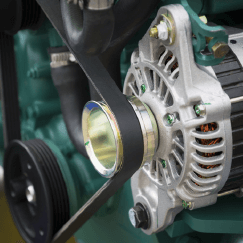
If you regularly sail, you’ll know how important it is to keep your marine engine running smoothly. The V-belt plays a crucial role in this. This seemingly small component is responsible for driving vital systems such as the alternator, water pump, and sometimes even the power steering pump.
A well-functioning V-belt prevents your engine from overheating or systems from failing. But what if your V-belt squeaks or shows visible defects? In this guide, we’ll explain step-by-step how to replace a V-belt, what to look out for, and why AB Marine Service is the place to get your V-belt.
How to recognise wear on a boat engine’s V-belt?
Wear and tear on a V-belt can take various forms. You’ll often notice it as a squeaking sound when starting the engine or when you accelerate. Other signs include:
- Cracks on the outside of the belt.
- Slack or an overly loose belt.
- Reduced dynamo performance, such as a poorly functioning battery.
- Engine overheating more quickly.
In marine environments, where moisture and salt are factors, a V-belt often wears out faster than in a car. It is therefore important to regularly check if the V-belt is functioning correctly and to schedule a replacement in good time.
Differences between a V-belt and a multi-belt on ships
You may have heard of a multi-belt, also called a drive belt. While they look alike, there are important differences:
- A V-belt has a characteristic V-shape, causing it to sit deeply within the pulley grooves. This provides a firm grip and makes the V-belt ideal for driving individual systems, such as the alternator or water pump. V-belts are commonly used in marine engines due to their simplicity and reliability in damp and salty conditions.
- A multi-belt, also known as a poly-V-belt, is wider and designed to drive several components simultaneously, such as the power steering pump, air conditioning compressor, and alternator. A multi-belt is mainly found in more modern engines with a compact design, where multiple components need to be driven at the same time.
How to replace a V-belt?
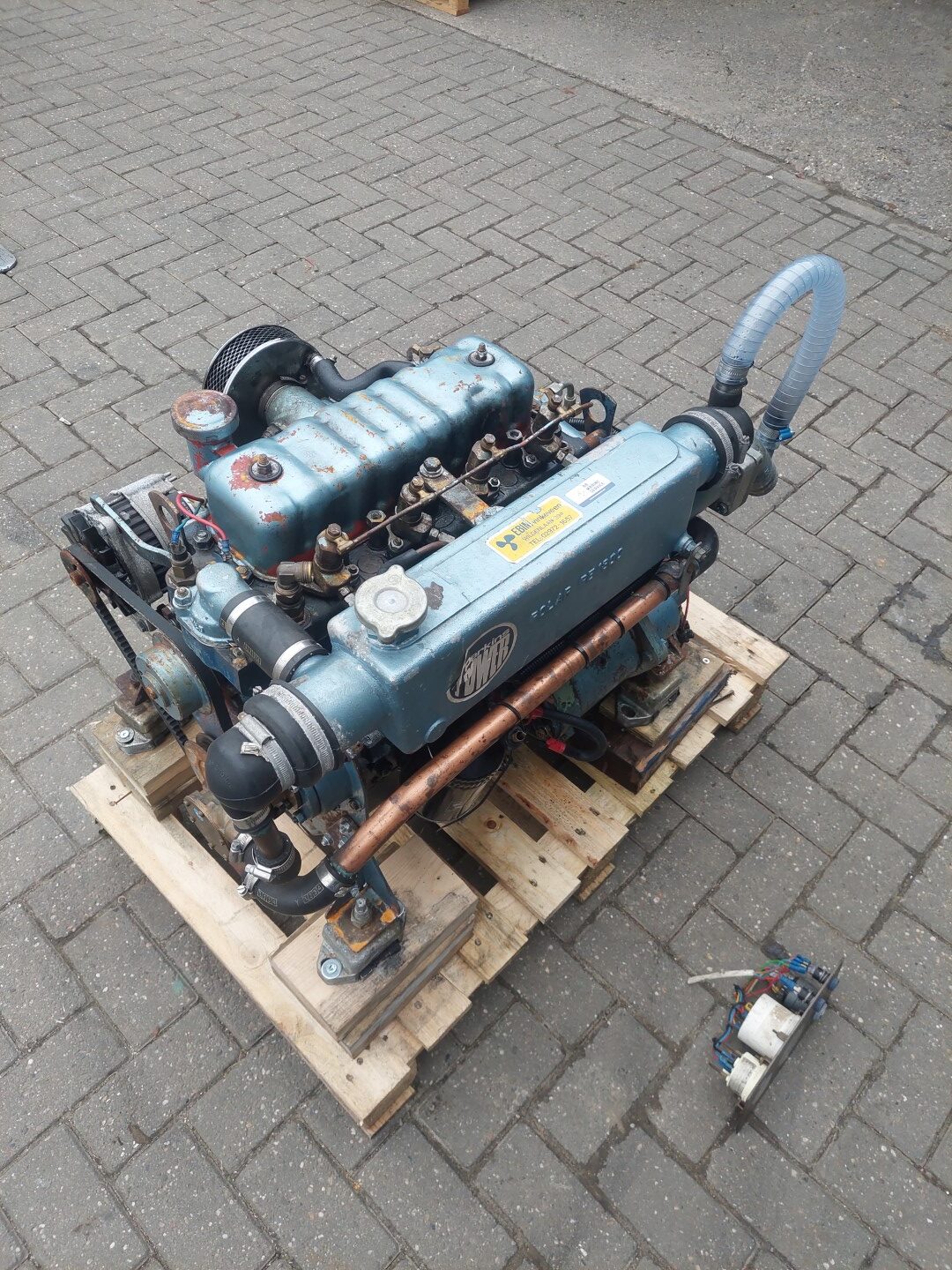
Replacing a V-belt is not a complicated job, but it does require the right tools, such as a set of spanners or socket wrenches, and a bit of technical know-how. Follow these steps:
Preparation and checks
- Turn the engine off and allow it to cool down completely.
- Open the bonnet or inspection hatch and locate the V-belt.
- Check the condition of the V-belt and note how it is attached across the pulleys. Taking a photograph may be useful.
Removing the old V-belt
- Loosen the tensioner pulley or adjustable bolt to release the belt tension.
- Carefully remove the old V-belt. At the same time, check the pulleys for damage.
Refitting the new V-beltr
- Check that the pulleys are properly aligned. If a pulley is crooked, adjust it before fitting the new V-belt.
- Fit the new V-belt over the pulleys in the same pattern as the old one. Make sure the belt is properly seated and not twisted.
- Adjust the tension of the V-belt. It should be firm, but still have a little give (about half a centimetre of play).
Check and testt
- Briefly turn the engine over to check that the V-belt is working correctly and is not making any unusual noises.
- Check the belt tension again after a short test period, as the belt may stretch.
How to correctly adjust the V-belt after replacement?
A correctly adjusted V-belt is important. The right tension prevents serious damage to components. Over-tightening can cause engine damage, while a belt that is too loose will squeal or slip. Here are some tips:
- Use a tension gauge if you have one, but pressing down on the belt by hand is also a good method.
- Ensure the pulleys are aligned. Crooked pulleys can damage the belt.
- Regularly check the tension, especially if your engine runs a lot.
How often should you replace a V-belt?
Replacing a V-belt depends on how often your boat is used and under what conditions. With intensive use or exposure to saltwater, it may be necessary to replace the V-belt more often than with a car that mainly drives in a dry environment.
As a rule of thumb, you can expect to replace it after every 500 operating hours or when you see signs of wear and tear.
Where can I buy reliable V-belts for marine engines?
For a high-quality V-belt, AB Marine Service is the place to be. We offer:
- Durable V-belts specifically designed for marine use.
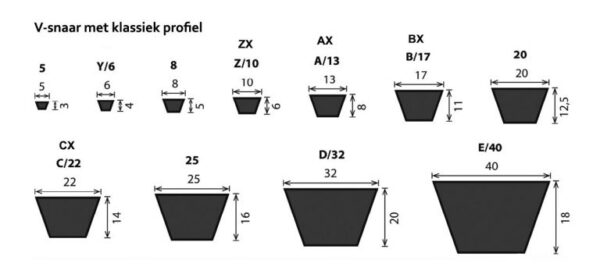
- A wide range, so you’ll always find the right size and profile for your engine.
- Expert advice on replacing and maintaining V-belts.
With our products, you ensure that your marine engine continues to run reliably and smoothly, so you can set sail worry-free. Order your new V-belt from our website today.
Why regular V-belt maintenance is important
A good maintenance schedule prevents unexpected problems. During a routine service, you can check the V-belt and other parts of your marine engine. This includes the timing belt, tensioner pulley, and pulleys. Regular maintenance extends the lifespan of your engine, saves on high costs, and prevents you from breaking down on the water.
Frequently asked questions about V-belts and multi-belts
How do I know if my V-belt needs replacing?
If you hear a squealing noise when starting up or accelerating, or if you see visible cracks, it’s time to replace the V-belt.
Can I replace a V-belt myself?
Yes, with a bit of technical knowledge, a steady hand, and the right tools, you can do this yourself. Just make sure you adjust the tension correctly.
How much does a new V-belt cost?
The price depends on the type of engine and the size of the V-belt. At AB Marine Service, we offer quality options at a competitive price.
Order your new V-belt from AB Marine Service
With this guide, you’ll know exactly how to replace a V-belt and what to look out for. If you have any questions or want to order a V-belt straight away, get in touch with AB Marine Service. We’re ready to help you!
 Get quick help via Whatsapp, click here!