Posted on Leave a comment

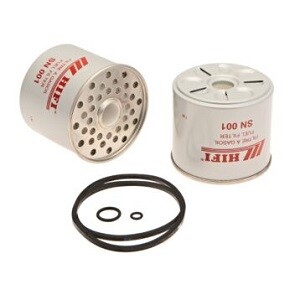
When should I change the fuel filter of my diesel engine?

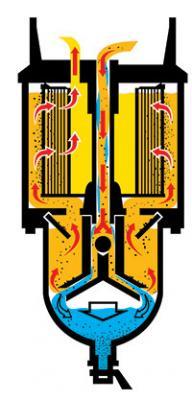
When there is water, diesel bacteria (sludge) or dirt (under) in or on the fuel tank, it is time to replace the boat’s engine fuel filter.

Therefore, check the filters of the fuel system regularly. E.g. annually when preparing the boat for winter. Do you see water or dirt in the inspection hole of the filter? Then it is likely that there is also water, diesel bacteria (sludge) or dirt at the bottom of the fuel tank. In that case, replace the diesel fuel filter.

Also read: Slime strings and clogged fuel filters

Posted on 4 Comments

How to test and replace glow plugs in the diesel engine of my ship or boat

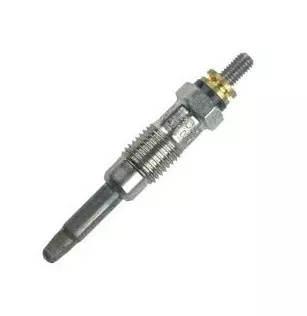
What are glow plugs?

A marine diesel engine has electric glow plugs that help it start when cold. Diesel engines use spontaneous combustion by compressing oxygen and fuel. Just before the highest pressure is reached and the piston is in the top position, fuel is injected through a vaporiser and the combustion process begins. As the engine can be very cold after not running for a while, it may need a little help. That is where the glow plugs come in. Glow plugs are located in the combustion chamber of the engine and are made of high-grade materials.

Testing a glow plug

To test the glow plug, measure the resistance using a multifunction meter or ohmmeter The wires are to be disconnected before measuring. The exact value of each plug varies, but a defective plug can easily be distinguished from a working one. If a current passes through and the ohmmeter shows a value, it would be fair to assume that the plug is in working order. If it reads infinite, there is an interruption and it would be fair to assume that the plug is defective.

Two types of glow plugs

Glow plugs come in two different types:

  1. Parallel glow plugs

    Parallel glow plugs are connected to earth (engine block) via the entry. The current flows back to the battery via the screw thread. They have one entry and are connected to one another. These are usually the Quick Glow Systems that run on the direct battery voltage.

  2. Serial glow plugs

    Serial glow plugs are working like a light bulb. These are often seen in old systems or spiral filaments. They have an incoming and outgoing wire or connection to the next one. The first plug is the entry and the last one is connected to earth. They work on reduced voltage with pre-heating resistors and a glow eye.

DIY replacement of glow plugs on a marine engine.

Remove any defective glow plugs. NB: they can be very tight, so be very careful, especially when dealing with thin-walled glow plugs. Spray generously with penetrating oil before removal if corrosion has built up around the plugs. Thicker plugs are less particular because of their different diameter and plug ratio.
Keep the area around the opening of the motor clean. Watch the maximum loosening torques (Nm = Newton metre = unit of torque) and the thread size (M).

Tip: also use a torque spanner for loosening.

Maximum loosening torques

  • M8 – 20 Nm
  • M9 – 22 Nm
  • M10 – 35 Nm
  • M12 – 45 Nm

Fitting new glow plugs

When fitting new glow plugs, it would be best to use the tightening moment as prescribed by the engine manufacturer. A little copper grease on the cutting edge and the thread is recommended. Tightening is also done with a tightening moment. They only need to seal. Indication of tightening moments for electrical connections:

  • M8 – 10 Nm
  • M9 – 12 Nm
  • M10 – 15 Nm
  • M12 – 22 Nm

Tightening moment for electrical connections

  • M4 – 2 Nm
  • M5 – 3 Nm

Removal of jammed glow plugs

When the maximum removal torque has been reached, discontinue the loosening effort and do not overstrain. That is because the glow plug may break. And that means dismantling the entire cylinder head. Try to loosen the glow plugs in the following three steps:

  1. Loosening: Spray with penetrating or synthetic oil. Repeat several times during the day and leave it to soak in overnight.
  2. Heat the plug: Expanding and contracting materials may create more play. Tune up the engine or use a power cable to warm up the self-regulating glow plugs and proceed a little longer than usual. Repeat this procedure. Please note: This procedure works only on glow plugs with 11 – 12V operating voltage.
  3. Loosening: Try to unscrew the glow plug once again. Using a suitable tool, carefully unscrew the glow plug in the cylinder head. A long, extended socket wrench often works better than a spanner. This will distribute the force more evenly without the need for straining it sideways. Use a tap wrench to work with both hands. If no luck, repeat the above three steps.
Posted on 4 Comments

How to install an inboard engine?

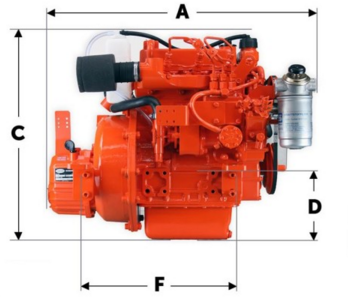
Are you going to install or re-install an inboard engine yourself? Then prepare yourself well, start with the basics and start measuring. Then you can replace an engine with minimal adjustments. For recent engine types, you often know the installation dimensions or they are easy to find. Pay particular attention to:

In any case, consider what you will need.

Propeller shaft height

First check if the engine matches the propeller shaft height. Are the reverse clutch output and the crankshaft at the same height? If the reverse clutch output is lower than the existing propeller shaft, the engine will ‘rise’.

Engine mounts

On some inboard engines, adjusting the existing engine mounts is not a problem. In case of a steel ship its foundation can be adjusted. In a polyester ship, this is more difficult. Therefore, please check in advance what is possible. Especially with a saildrive, you are often bound to prefabricated through-hulls.

Maximum tilt

Also check whether the inboard engine can handle the maximum tilt when sailing. The maximum tilt can often be found in the manual. A homokinetic drive solves the problem in a different way.

Reverse gear

The Velvet, PRM, Hurth, ZF and Twindisc reverse gears are well known common types. The ratio is often given as engine speed divided by the output speed, e.g. in the ratio of two to one (2:1). This ratio means: Two engine revs / one propeller shaft rev (or simply half).

Often the direction of rotation is indicated with L or R. L 2:1 therefore means: a two-to-one left-hand reverse gear for a left-handed propeller.

You may also come across gears, e.g. for Volvo Penta, with an A for Angle. The axis of these reverse gears is rotated by 7 degrees. Then the motor does not have to tilt as much.

Propeller

Note the direction of rotation of the screw. There are left-hand and right-hand reverse gears. The direction of rotation of the gearbox is determined with the ship moving forward and you looking at the bow.

Be careful with a ‘Z-drive’. The engine will then be reversed, so check the specifications carefully.

AB marine service can carry out the power requirements calculation for your ship.

Power

If you keep the power in the same direction, you can often use the same supply and return connections, such as the exhaust gas outlet, cold water inlet or circulation pipes.

If you are going for larger or smaller power, check the diameter of the connection on the engine. This is already a good indication of the required size.

If the exhaust manifold has a 45 mm diameter, you can use that one. Do not use smaller diameters, this will cause the engine to brake, with all its consequences. Bigger ones are often not a problem.

Propeller shaft and bearing

Also think about connecting the propeller to the reverse gear. Some brands are interchangeable, but this is not always the case. In that case you will need an adapter flange. These are available separately on request or are supplied ready to use with a homokinetic drive.

Want to prevent vibration and save time when connecting? Consider the advantages of a thrust bearing with a homokinetic drive.

What do I need?

Posted on Leave a comment

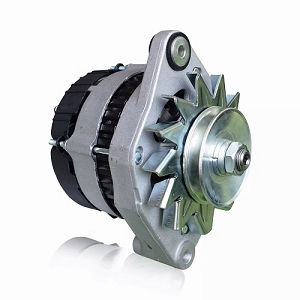
I have a 12V battery, but the alternator says 14V. What is the difference?

In boats, you have got 6V systems (old, but still common), 12V and 24V systems. The 12V is most common in pleasure cruising and 24V is found in larger ships and inland vessels.

This voltage is energised by the battery, which is recharged by an alternator on the combustion engine. This voltage is higher in order to fill ‘the vessel’ quickly. Without a voltage difference there is no ‘flow’. This creates the confusion between the terms system voltage and charging voltage.

There are also different batteries: starter, traction and semi-traction, sometimes with their own charging value. Real full-traction batteries require a higher charging voltage, always check this when purchasing.

On the AB Marine service site, we use the term ‘system voltage’ as much as possible. A 12V battery must be charged with a 12V alternator. Therefore we use the indication 12V for the alternator. Using the 14V or 13.8V charging voltage as indication would lead to confusion. We supply the alternators standard with a set value for charging starter and semi-traction batteries.

  • 6V calcium battery = 6.9V charging voltage (e.g. vintage car)
  • 12V calcium battery = 13.8V – 14.4V charge voltage (all starter batteries and common semi-traction batteries).
  • AGM semi-traction battery = 14.6V – 14.8V charging voltage
  • GEL battery = 14.2V – 14.8V charging voltage

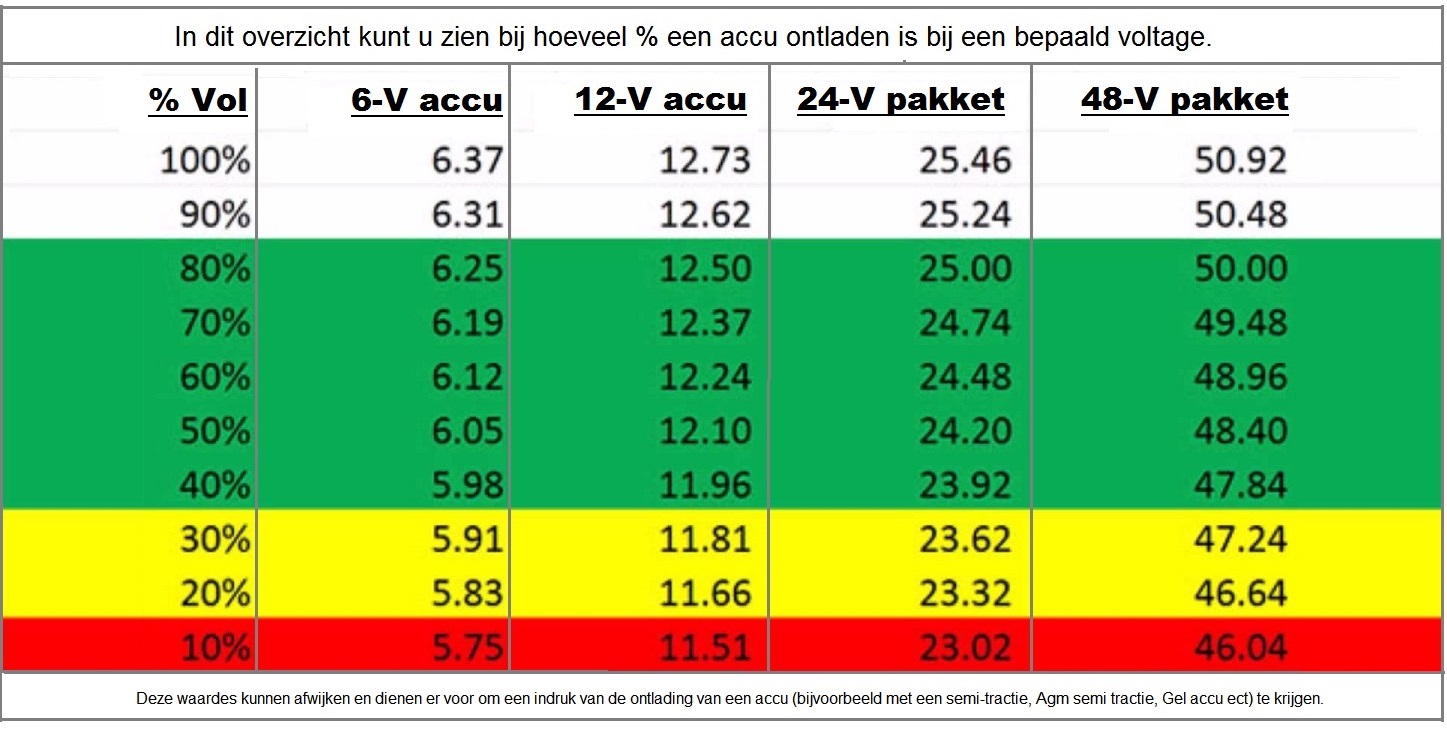
It is also possible to determine the status of your battery by measuring the voltage, see the corresponding voltages below. Preferably do this a day after charging.

Gebruiksaanw. / Handleiding - Accu Service Holland

Posted on Leave a comment

Is your expansion vessel or cooling system running empty?

Is the expansion vessel or cooling system (slowly) losing pressure? It could be a leak in either direction.

First make sure that there is no leak to the outside of the engine. Leaking cooling liquid can evaporate quickly when the engine is hot, which makes it hard to detect. Look for traces of dried cooling liquid. This has usually the colour of the liquid itself: yellow, green or red, depending on the brand and type of liquid. It can easily be fixed by tightening the hose clamp or replacing a cooling water hose.

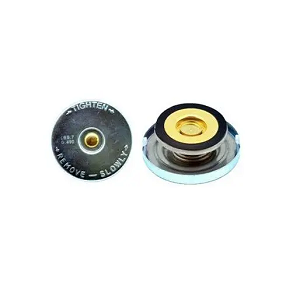
Sometimes, the leak may show up when using a pressure tester to apply pressure on the system. Also check that the rubber seal of the radiator cap (or expansion cap) is still intact and not worn out.

What if no traces of leaking cooling liquid can be seen?

If the liquid does not run out, it may also escape via the heat exchanger that is connected to the water from outside the vessel. It means that – the other way round – water from outside the vessel enters the cooling system.

As a test, pinch off the outgoing cooling hose from the water from outside the vessel at the exhaust injection elbow. With the engine running, the impeller pump should be building up pressure (no risk of damage) and the cooling system should start filling in case of a leak between the outside water system and the engine heat exchanger. The fluid level in the expansion vessel should rise. That is when it is time to replace the rubber sleeves. The sleeves separate the ”outside water system” from the ”coolant system”.

If all the above is not the case and the motor oil contains no cooling liquid, the engine may also have let cooling liquid enter into the combustion chamber. The cause could be a leaking head gasket or cracks in the cylinder head. Many mechanics cannot determine this fault from the outside for sure. Especially in case of a small leak, this is very unpleasant and hard to assess.

Possible solutions include:

A simple pressure tester (also useful for the first and second step). A low-cost solution, but make sure that the kit comes with the right cap. The tester is also available from AB Marine service, if so required. Alternatively, a nitrogen tester is also a reliable testing tool. It shows when nitrogen from the combustion gets into the cooling liquid. For this, google on e.g. “cylinder head leakage tester kit”.

If you cannot find the cause in steps one and two, remove the cylinder head for further inspection.

Spare parts for the cooling system

Posted on 2 Comments

Starting problems? 3 tips to fix.

Here are some tips in the event that you have a battery-related problem or a malfunction in the starting system.

If the engine of your boat has little or no power to start, the starter motor or battery may be defective.First things first: make sure that you have checked the following before you start looking at replacing these parts. Several other things, such as a corroded main fuse, mass switch or soiled electrical connections and poorly connected wiring, may be the cause of a starting problem.

Make sure you are safe before you start working.The engine should only run through the starter motor without starting, so turn off the fuel supply. This can easily be done by using the stop solenoid or by putting the throttle in the stop position. Let’s get the multimeter out and do some testing!

1. Battery check in a few steps!

Step 1: A full battery; set the multimeter to DC (direct current) voltage, connect the red probe to the positive and then the black probe to the negative battery terminal. If the multimeter indicates that the battery output is less than 12 volts, first charge or replace the battery before we continue. At 12.4 volts, the battery is fully charged. Double that figure (24.8 volts) for a 24-volt battery. A few millivolts more or less is okay.

Step 2: Put the multimeter back on Direct Current. Connect the red wire of the multimeter to the positive terminal of the battery, and then the black wire to the negative terminal. Proceed with step 3.

Step 3: Turn the ignition lock to the “Start” position and start the engine, keep it going for about 4 to 5 seconds.Read the voltage as shown on the battery multimeter while starting the engine.The battery is in order if the multimeter reading exceeds 9.5 volts during start-up. A reading of less than 9.5 volts indicates too high a drop in voltage. The cause may lie in a poor chemistry transfer in the battery itself due to age. About time to replace it! Battery in order? Keep on reading.

2. Weak starter.

Since the battery has found to be in order or replaced, it is now time to have a look at the starter motor. Even though the battery was the only problem, the following test may prevent many headaches in the future. Corrosion is a common problem. Check the connections from the battery to the starter itself for any deposits, including the negative terminal. Also check the condition of the connection between the starter and the engine block. This includes disassembly and inspection, but taking measurements could be a faster option in this case. This can be done as follows:

Step 1: Put the multimeter on Direct Current. Connect the red probe to the positive battery terminal and then on the relay connection of the starter, from where the copper cable enters the starter motor. This is the last connection before the + plus disappears in the starter motor itself. Below called the “M terminal”.
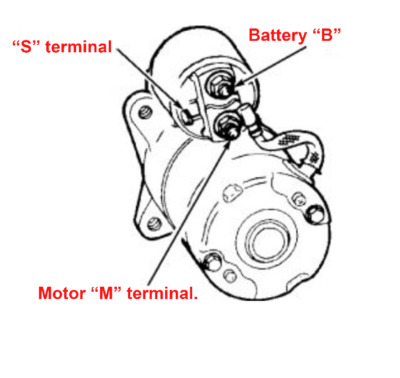
Step 2: Turn the ignition lock to the “Start” position and start the engine without running it. Read the voltage as shown on the multimeter while starting.

Step 3: Without drop in voltage between the cable and the starter relay, you should now read 0 volt. But people often read 0.1 volt, and 0.1 to 0.2 volt is no exception for older systems.

It means a voltage of e.g. 12.1 volts starts from the battery, but – due to resistance or a poor contact – ends up at only 12.0 volts. A multimeter measures the voltage difference.So the multimeter will measure a “difference” of 0.1 volt, any number higher than 0 volt indicates resistance. This process can be repeated on the plus terminal for each individual contact and connection, as well as for the negative terminal. That is because every positive electrically charged atom that goes in has to come out again via the negative terminal.
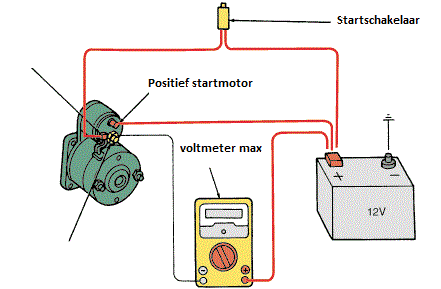
 

Starter meter

Step 4: Add up the values of the measurements in the previous steps. The sum of these values should not exceed 0 to 0.3 volt. The lower the number, the better it is. Just think of it. When starting an ordinary 4-cylinder boat engine, it will run up to 1000 Amps for a short period of time from standstill, after which it will drop until the engine runs at about 200 to 300 Amps. Until the engine runs 1000 Amps with 0.3 drop in voltage, the starter motor will drop 300 Watts. For a standard nominal 1200-Watt starter motor, it means that 25% of the starter capacity is lost. It shows that a minor drop may have major consequences. (example)

3. Conlusion.

First fix the resistance loss and then check that the power of your starter motor is back.
This was about testing the power supply of your starter system. If the starter motor still fails to give full power, it may have an internal defect. In that case, we suggest that you contact one of our specialists for more information about a possible solution.


Facts!

R = U / I or Resistance = Voltage / Current or Ohm = Volt / Ampere (Ohm’s law)

P = I * U or Power = Current * Voltage or Watt = Ampere * Volt

Watt = Ampere22 * Ohm
Watt = Volt / Ohm
Ampere = Watt / Volt
Volt = Watt / Ampere

An example with water flowing through a tube gives a better insight into the difference between current and voltage:

Electric charge in volts:pressure of the water in a tube.
Current intensity in Amperes:amount of water per second flowing through a tube.
Resistance in Ohm: thickness of the water tube.
Power in Watt:force of the water against e.g. a paddle wheel.

Click here to read more about replacing the starter motor

Replacing a starter motor yourself? In 3 steps.


Posted on 1 Comment

To load batteries, battery separator

Charge the starter motor battery and the light mains battery simultaneously without being connected. Yes, that is possible!

You spent all day on the water and have made good use of all the conveniences the boat has to offer. The fridge is running, the lights are on, and you have had a good night’s sleep. The following morning, when you are about to set off for your next destination, you turn the ignition lock to start the engine, but then…

The familiar sound of a failing starter motor due to insufficient voltage. Sufficient power for lights and accessories is one of the first requirements when you venture on a long trip. But sufficient power is also needed to start the engine the next day.

Because the power requirements of the mains and the starting system are different, the best way to solve this problem is to use two separate batteries that suit the individual systems. The problem is caused by the fact that the mains is often used for a longer period of time and the starting system requires only a short jolt of power. Special start and traction accumulators are available for this purpose.

Even for smaller installations is the use of a separate light and start battery system recommended. While using power from the light battery, there is no connection with the start battery. The latter is therefore always fully charged and remains available for starting the engine. After which the batteries can be recharged by the generator of the engine.

After separating both power sources, they should also be charged separately.

After separating both power sources, they should also be charged separately.
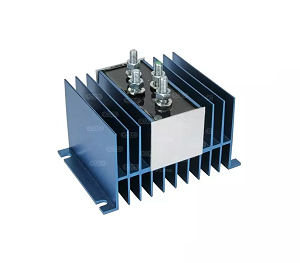
To separate the batteries and charge them with the engine generator, use a battery separator, also called a diode bridge, to distribute the output voltage among the two batteries. Alternatively, use a separator relay that switches to the second battery when the first one is fully charged. Both parts can be found here.

A battery separator is a specially manufactured diode bridge that connects the second battery (the light battery) to the alternator while the engine is running. The relay is controlled by the so-called “D+” connection of the alternator and has a provision to prevent overloading of the alternator and the charge regulator.

A choice to make: battery separator or diode bridge?

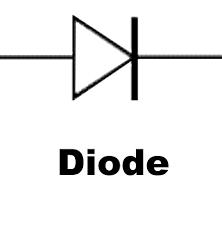
The main advantage of a battery separator is the outright separation of the battery sets under all circumstances, so if one battery is flat, it can never draw current from the other battery. Think of two barrels of water. A separator conducts the charging current from the alternator or battery charger and distributes it to the battery sets. This is done through two or more diodes, which act like a “non-return valve” for the charging current: there is only one flow direction for the current; it cannot flow back.We carry a range of simple battery separators to set up a system as described. Always remember the voltage and required power that may run over the relay.

Rule of thumb is as follows:

70 AMPERE DIODE BRIDGE: for chargers and alternators up to 55 Amps maximum charging current.
120 AMPERE DIODE BRIDGE: for chargers and alternators from 60 to 90 Amps.
150 AMPERE DIODE BRIDGE: for chargers and alternators from 100 to 120 Amps

Please keep in mind that a diode always has a bridging voltage (threshold voltage) of 0.6 volt. batterijscheiderIt means that when using a 14V charging system, no more than 13.4 volts will run to the battery. This may cause a problem for older alternators. A separator fitted with a compensation diode prevents a voltage drop over the diode, so that the battery is charged with the correct voltage.

A battery separator will still allow charging the battery, even with a charger from the general 230V power mains. See the diagram for a simple set-up of a battery separator.

Take a quick look at a low-cost battery separator for your boat!

Posted on 5 Comments

A dry or wet exhaust?

What is better, a dry or wet exhaust?

A dry exhaust is a simpler system than a wet exhaust. However, the wet exhaust does have significant advantages. Which will you choose? In this article, we’ll guide you through this dilemma, explaining the difference between a dry and wet exhaust, and outlining the various types of cooling water systems. Shall we dive in?

What is a dry exhaust?

A dry exhaust system is similar to a car’s exhaust. A pipe is connected to the exhaust manifold via a flexible joint and directs exhaust gases directly outside through the silencer. The engine’s cooling water is added to the exhaust system externally, or much later on.

The pipes and tubes are often made of steel to prevent them from melting due to the heat. It is a simple system, but has two major drawbacks:

  1. it gives off a lot of heat (up to 600 degrees at the source) and the system produces a lot of noise.
  2. A dry silencer is often desirable to dampen the noise.

Right, now that we know what a dry exhaust system is, let’s move on to the next issue.

What is a wet exhaust?

With a water-cooled exhaust (wet exhaust), the manifold is fitted to the engine. The manifold is often custom-made and cast iron. A wet exhaust can also often be recognised by the frost plugs in the cooling channels. The heated cooling water in the engine is around 60 to 90 degrees when it leaves the engine and can therefore still be perfectly used to cool hot exhaust gases of 600 degrees.

In the initial section of the exhaust, the water and gases are not yet mixed. This prevents water from entering the engine and impeding the gases. The gases must be able to exit the engine smoothly to avoid reducing engine performance. Shortly after the engine, the gases and liquids combine and exit the engine via the exhaust.

exhaust

Differences between a wet and dry exhaust

The main differences between a dry and a wet exhaust are the temperature and the noise. A dry exhaust is louder than a wet exhaust, and the temperature of a dry exhaust system is higher than that of a wet exhaust. The difference in temperature between a dry and wet exhaust is quite noticeable. With a wet exhaust, the noise is muffled by the water. A rubber exhaust hose then offers greater flexibility and immediately increases the lifespan of the exhaust.

With a lower-mounted engine, as is common on many yachts, good water drainage is especially important. The hull of the boat can indeed influence the placement of the exhaust and the functioning of the system.

The different types of cooling water systems

There are three types of cooling systems:

  1. Direct cooling of the boat: A cooling water system in which the engine block is pumped with canal water via a rubber impeller pump.
  2. Indirect cooling of the boat: a separate cooling water system (also called an intercooling or heat exchanger system) in which you have coolant in the engine and pump cooling water through a heat exchanger using an impeller pump.
  3. Indirect cooling of the boat: a keel cooling system, where cooling pipes filled with coolant run under the boat. The latter system does not allow for a wet exhaust, unless an additional impeller pump or electric pump is fitted.

Converting a dry exhaust to a wet exhaust system

If you want to experience the benefits of a wet exhaust system, you can convert your dry exhaust. Complete exhaust sections are available. Alternatively, you can opt to add water to your existing dry exhaust system, with only the initial section remaining uncooled. While the conversion may require an investment, it’s a job that a competent DIYer can manage with great satisfaction.


Wet exhaust system with waterlock and silencer

A wet exhaust system comprises the following components (from start to finish)

  • A water intake pipe under the boat with a shut-off valve to stop the supply for repair or maintenance.
  • A seaweed filter as an inline filter to prevent any harmful material from reaching the impeller pump.
  • A suction pump on the engine (impeller or raw water pump).
  • If converting from keel cooling to indirect cooling: a heat exchanger with a water-cooled exhaust manifold.
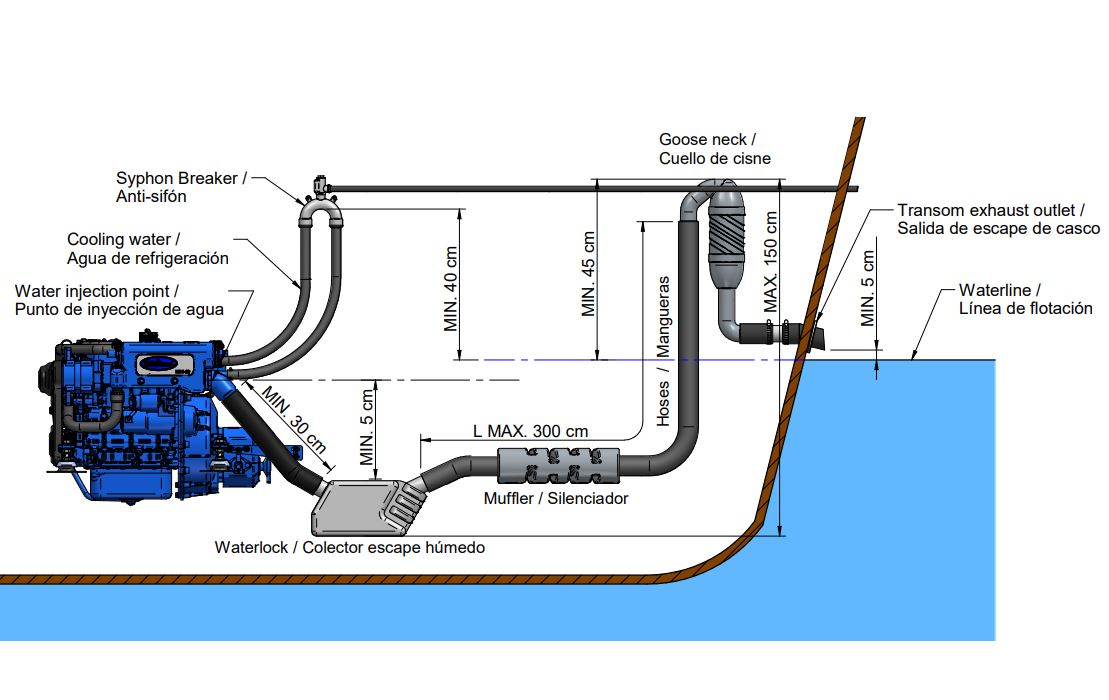
  • A water injection fitting, fitted after the exhaust manifold, which adds cooling water with an aerator to prevent the water from siphoning back into the engine when the engine stops.

The use of a so-called waterlock is recommended for a wet exhaust. It collects the water and uses overpressure to push the water up through the exhaust with the exhaust gases. The waterlock also dampens sound by impacting the water.

The goose neck acts as an extra safeguard to prevent water backing up when the engine is positioned lower, as is the case in most sailboats.

The silencer can still be fitted as an additional option; view our options in the category exhaust damping.

With wet exhaust systems, you can also use a muffling and flexible exhaust hose. The whole thing is securely fastened with stainless steel hose clamps.

Would you like advice about the exhaust system? Get in touch via the contact page.

Posted on Leave a comment

A flexible engine set-up

Vibration-free sailing is for relaxation!

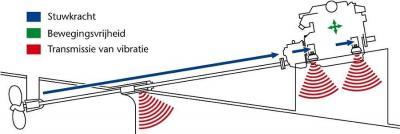
Ever made a lovely boat trip, but eased down on the throttle after a while because of all the noise? After all, for a stress-free yarn we want to be able to hear one another. A flexible engine set-up with engine supports will minimise any noise and vibration. But what is the basis of vibration-free (relaxed) sailing? The principle is simple: remove the fixed connection between the engine and the bedplate. This makes that vibration of the engine is felt throughout the boat. Allow the engine to float on its bedplate to get rid of the noise. But how is that done? Start at the base;

beeld

Why do engines vibrate?
Engines have internal parts that quickly move back and forth. It takes only milliseconds for the piston to be pushed down by an explosion and then back up again, driving the crankshaft at the same speed for a new compression stroke. Modern engine blocks are compact and lightweight thanks to a short piston stroke and aluminium construction. This has many advantages, such as saving space and lower production costs. However, due to its lightweight construction, vibrations are less attenuated and absorbed by the dead weight, and the shorter engine stroke also requires a higher RPM to keep running. And we know from experience that the further we open the throttle, the more noise we create.

Detached engine mount
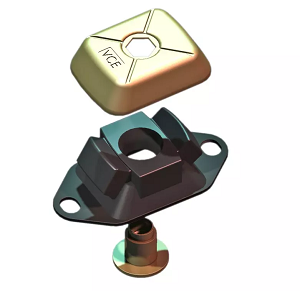
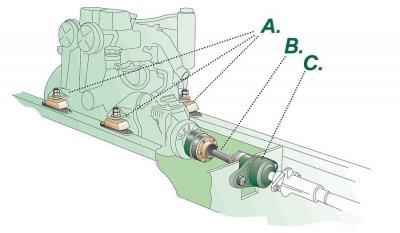
All the more important to ensure a good and solid bedplate with soft engine mounts, which detach the engine from the bedplate, as it were. The principle is an engine mount as soft as possible, but still strong enough to carry the weight of the engine, the reverse clutch and a part of the propeller shaft.The softest possible rubber
The softness of rubber is expressed in SHORE with a hardness number. In addition, the letters A through to D determine the category of rubber, on which we will not elaborate in this article. SHORE 10 rubber is very soft, and the higher the number the firmer it becomes. A heavier engine also needs stronger rubber to make sure that the rubber is not squeezed out by its weight. Engine mounts are often SHORE 35 and up. It is a matter of finding soft rubber that is firm enough to support the engine. Hardness and quality of the rubber often determine the price and lifespan of the product. Good advice! It would be wise not to look at the price when purchasing engine mounts. Cheap engine mounts from other sectors (washing machine mounts) may be able to do the job, but are not always resistant to oil, grease and diesel fumes that we encounter in engine spaces.

dempers

Too soft?
If the engine mounts are too soft, sturdiness will be lost due to the pull and push movement of the propeller shaft and engine when manoeuvring. V-shaped engine mounts lock the engine in place under load due to their V shape. However, since the engine pushes itself against the rubber, it will also lose some of its muffling effect.

But what is the best solution
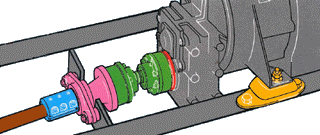
For optimal muffling, a combination of flat vibration isolators with a thrust bearing would be the best solution. A thrust bearing keeps the propeller shaft in place. It is a bearing that can absorb forces from any direction. It also hangs in rubber and is mounted between the reverse clutch and the propeller shaft. After installation, it has to be set exactly straight and level to prevent overloading of bearings and propeller shaft sleeves. Even better is to put a flexible (homokinetic) joint between the coupling and the shaft, so that even when under pressure and shifting, all parts can still be running stress-free.

tekening

Example of a homokinetic engine arrangement:
propeller shaft; brown
clamping hub; blue
thrust bearing; pink
homokinetic coupling; green
adapter flange; red
engine mount / vibration isolator; yellow

Advice
Looking for less vibration and more relaxation? In other words: a better engine set-up? We suggest you take a good look at the bedplate of your engine set-up and think about possible improvements. We advise to have this done in consultation with our experts. All engine and clutch makes require their own power calculations. Based on such data, we will be able to draw up a plan.

We supply arrangements for any brand, engine model and reverse clutch. Feel free to ask for your own smooth sailing.

Posted on Leave a comment

Slime strings and clogged fuel filters.

Slime strings & clogged fuel filters. 

Diesel bacteria: for those who are unfamiliar with this phenomenon, we can assure that prevention is better than cure. Anyone who has experienced it won’t forget any time soon. In less than no time, fuel filters or even complete pipes and pumps are clogged up and stop working due to long black flakes and brown strings. Say goodbye to your boat trip.

Diesel bacteria can be compared to algae in an aquarium. They mainly form on the bottom layer of water and diesel in the tank. Water is heavier than most fuels and will collect at the bottom of the tank. Because the intake or drain valve of the fuel pump is often in a higher position, the water can stay in the tank for a long period of time.

Bacteria in your diesel?

Like many fuels, diesel is a natural product and contains microbes. The right conservation and treatment will cause little or no problems with bacterial growth. But with the right breeding environment, such as water, they will multiply rapidly. Bacteria are always present in the fuel, but also in the outside air from where they can enter the tank through venting holes. Condensation and oxygen from outside, in combination with a malfunctioning water separator, makes a fuel tank the perfect breeding ground. Especially in water sports, the circulation speed of the fuel tank is not always the same.

aanbieding-delphi-296-dieselfilter-waterafscheider

Condensation as breeding ground

A fuel tank is usually mounted on the inside of the boat. Therefore, the tank cools down at night and warms up during the day. Oxygen that moves through the process of heating and cooling always contains moisture. Warm air that cools down forms drops of water as condensation to the tank wall.The water drips down and sinks to the bottom of the tank, below the diesel. Diesel has a lower specific gravity than water. A practical tip is to keep the air space above the fuel as small as possible. Always fill up the tank completely when you are planning not to use the boat for a lengthy period of time (use winter diesel before the winter break). After all, the less air exists at the upper inside part of the tank where oxygen and condensation can settle on the walls of the tank, the better. Warmth and humidity may be the perfect conditions for diesel bacteria to multiply rapidly, but they can also do their work during winter. For that reason is a clean and dry tank ventilation in the right place desirable.

Rain and waves

Also, the incorrect position of e.g. the tank filler cap or vent may quickly cause water to accumulate inside the tank. Things like rainwater that seeps through an outside air vent, or splashes of water that hit the deck and get into your tank, must be taken into consideration. Also remember the correct sealing of the diesel filler cap on the outside and periodically check the seals inside the cap.

Is this new?

The government has ordered that diesel must contain less sulphur than in the past. Burning sulphur is very damaging to the environment, but sulphur also stopped bacteria growth in diesel in the past. Moreover, since recently a few percent of biodiesel is added to the diesel. Biodiesel is extracted from vegetable products and is therefore gaining importance as the world’s oil reserves are dwindling. But biodiesel has also the ability to attract water quickly and contains a higher percentage of microbes.

dahlflowdiagram

What can be done about it?

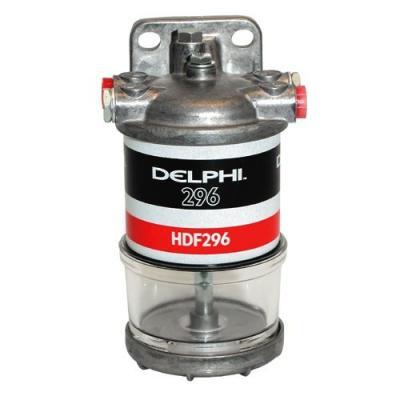
If possible, check visually for water formation in the tank, like a large “bubble” of water at the bottom. Never checked or drained this before? In that case, this will be a good start. Does the problem recur frequently? Check what the cause could be as described above, e.g. a malfunction or a venting problem, etc. The supply pump that feeds the fuel to the engine often pumps the diesel in the tank several times around via the return line. In this way, the tank is often kept clean and filtered. A correct filter installation with a water separator is able to collect water from the tank. Since water is heavier than diesel, it is collected at the bottom of the glass. The glass should show clear diesel. If clouded, it would indicate contamination. Frequent contamination and hard to drain the tank? The solution may lie in an external pump unit that continuously circulates the diesel through a filter set and separates the water.

Fuel filters

Water separators

Fuel pumps

Hoses and pipes

We welcome your comments or experiences!