
Slime strands & clogged fuel filters. Diesel bacteria; for those who are unfamiliar, we can say that prevention is better than cure. Those who have experienced it will not forget it quickly. In no time, clogged fuel filters or even complete pipes and pumps stopping due to long black flakes and brown strands. That’s the end of your trip. Diesel bacteria are comparable to algae in an aquarium. They mainly form on the bottom layer of water and diesel in the tank. Water is heavier than most fuels and will collect at the bottom of your tank. Because the suction or draining point of the fuel pump is often located higher, the water can remain in the tank for a long time. Bacteria in the diesel? Diesel, like many fuels, is a natural product and contains microbes. With the right preservation and treatment, you will have little to no trouble with bacterial growth. However, give them the right breeding ground, like water, and they multiply at a rapid pace. The bacteria are always present in the fuel but also in the outside air and can enter the tank through the vent. Condensation and oxygen from the outside, combined with a poorly functioning water separator, make the fuel tank the perfect breeding ground. Especially in watersports, the circulation rate of the fuel tank is not always very high. Condensation as a breeding ground 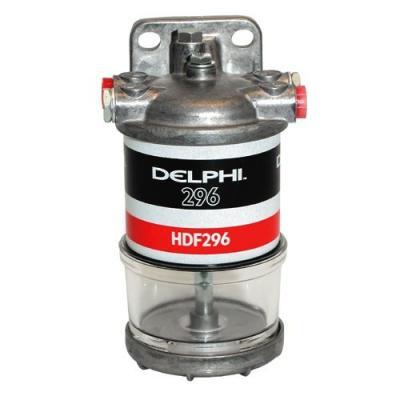 A fuel tank is often installed inside. In the evening, the tank cools down and warms up again during the day. The oxygen that moves through the warming and cooling process always contains moisture. Warm air that cools down forms water droplets (rain), and this condenses against the walls of the tank. This water drips down and settles at the bottom of the tank, below the diesel. Diesel has a lower specific gravity than water. A practical tip is to keep the space above the fuel as limited as possible. Always fill the tank completely before leaving the boat unused for a long time (for winter storage with winter diesel). After all, the less space there is at the top of the tank where oxygen and condensation can settle on the walls of the tank, the better. Warm and moist conditions are also perfect for diesel bacteria to grow rapidly, but even during winter, diesel bacteria can thrive. A clean and dry tank vent in the right place is therefore recommended. Rain and wave action Even incorrect placement of, for example, the fuel fill or vent can quickly cause water accumulation in the tank. Rainwater that can seep in through an external vent, or splashes of waves hitting the deck, can get into your tank, so this needs to be taken into account. Also, pay attention to a proper seal of the diesel fill cap on the outside and periodically check the seals in the cap. Is this new? Diesel today must contain less sulfur than in the past, as required by the government. Sulfur that you burn is highly polluting for the environment, but sulfur used to prevent bacterial growth in the past. In addition, a few percent of biodiesel is now added to diesel. Biodiesel is made from plant-based products and is therefore interesting as the world’s oil reserves are depleting. But biodiesel has the property of quickly attracting water and contains a higher percentage of microbes. What can you do?
 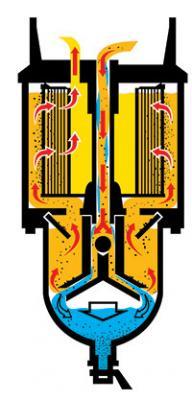 If possible, check visually if you can see water formation in the tank, often you’ll see a large “bubble” of water at the bottom. If you have never checked or drained it, that’s a good start. Do you frequently encounter this problem? Look at what the cause might be, as described above, such as malfunctioning venting, etc. The fuel supply pump that delivers fuel to the engine also often pumps the diesel back into the tank several times through the return line. This way, your tank is often kept clean and filtered. A proper filter installation with a water separator can catch water from your tank. Since water is heavier than diesel, it is collected at the bottom of the glass. Through the glass, you can also see whether your diesel is clean or maybe cloudy, which indicates contamination. Do you experience a lot of contamination and have trouble draining the tank? Then you can opt for an external pumping system that continuously circulates the diesel through a filter set and separates the water. Fuel Filter Water Separator Fuel Pump Hoses and Pipes
Comments or experiences are welcome!
 Get quick help via Whatsapp, click here!